


September 25, 2024
.avif)


Quick commerce (q-commerce) is no longer a niche urban experiment. The global quick commerce market size was valued at USD 184.55 billion in 2025 and is projected to grow from USD 199.92 billion in 2026 to USD 385.36 billion by 2034, exhibiting a CAGR of 8.55% over the forecast period. That's not the growth curve of a trend. That's the growth curve of a transformation, one that we all know has been taking shape over the years.
So, if you are a business owner, a startup founder, or an entrepreneur quietly thinking about your next move, the honest truth is simple and right in front of you. It is that the quick commerce window is wide open right now, but it won't stay that way forever. So it is up to the prudent businesses to make hay while the sun shines.
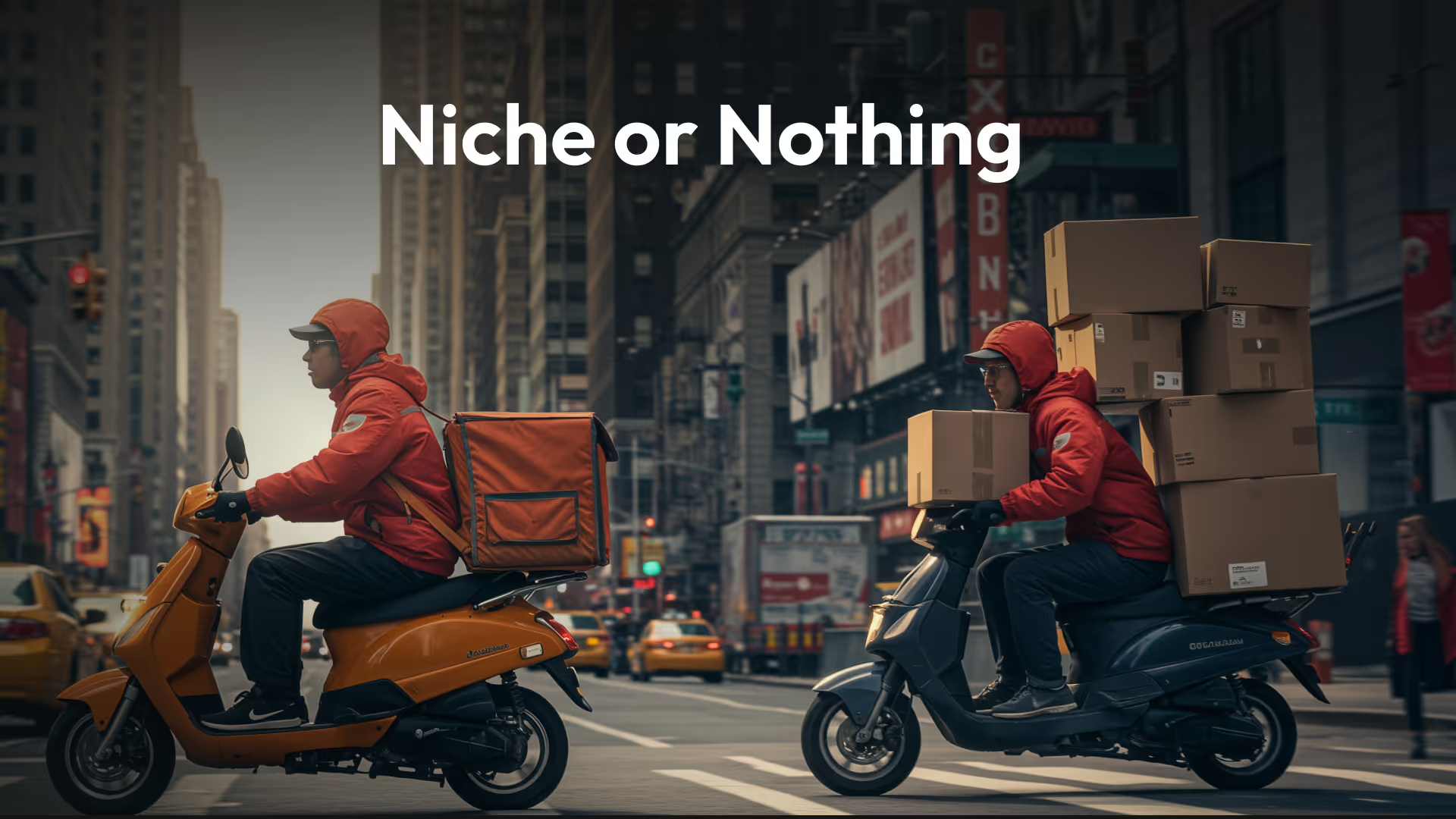
Quick commerce is e-commerce with the patience stripped out. Where traditional online shopping might deliver your order in two to five days, q-commerce promises delivery in under an hour, and often in minutes. Speed is the new currency nowadays.
Think of groceries at your door before your pasta water even boils, or just think of pharmacy essentials before you've found where you left the thermometer. This ain’t some joke. This is commerce at its lightning quick best.
The q-commerce model mostly centres on hyperlocal micro-fulfilment centres (called ‘dark stores’) positioned close to customers, combined with real-time route optimization and on-demand delivery networks. The result is a shopping experience that doesn't ask the customer to wait, plan ahead, or compromise on convenience.
And consumers? They love it.
.avif)
The quick commerce market is being propelled by a confluence of powerful forces:
There is something secretive and covert about what the headline numbers don't immediately reveal. As against the common observation and public notion, quick commerce is not at all just an opportunity for venture-backed giants. Instead, the structure of the model also actually favours agile, locally-embedded operators in ways that traditional retail never did.
1. Dark stores are relatively low-cost to set up. Unlike a retail storefront, a micro-fulfilment centre doesn't need foot traffic, prime real estate, or an elaborate fit-out. A well-located warehouse or even a converted commercial space in a dense neighbourhood can become a profitable operational node.
2. Niche categories are underserved. The dominant players viz a viz Gopuff, DoorDash, Getir, Glovo are fighting over grocery and food. But courier services, gifts and flowers, pharmacy, and specialty products remain wide open for category-specific entrants who understand their customer deeply.
3. Technology has democratised the infrastructure. Third-party logistics platforms, white-label delivery apps, and route optimisation SaaS tools mean a first-time entrepreneur doesn't need to build the tech stack from scratch. The barrier to entry has dropped substantially and setting up a business has become easy.
4. B2B quick commerce is nearly untapped. While consumer q-commerce gets all the press, businesses need rapid replenishment too— office supplies, perishable ingredients for restaurants, last-minute packaging materials. Founders who target business buyers in dense commercial districts are looking at a far less crowded arena.
.avif)
The players winning in this space share a few non-negotiable habits:
Quick commerce is still in its early-innings in most markets outside dense metros with a massive potential and scope ahead. The same-day delivery segment already commands a major share of global q-commerce revenue, but the next frontier is predictive delivery, where AI systems anticipate what you need before you've searched for it.
For entrepreneurs and businesses watching from the sidelines, the sensible question mustn't be whether quick commerce will grow. Precisely stating, at 28.1% annually for the next decade, that question is settled. The real and more intelligent question is: ‘which part of that $1.36 trillion will you be positioned to serve?’
The infrastructure is available. The consumer demand is proven. The market is expanding faster than most verticals you'll encounter in your professional lifetime.
The only thing missing is you accompanied by an idea that has the potential to disrupt the norms.

.avif)