

Restaurant Tech
GloriaFood Upgrade Guide: Steps Every Restaurant Must Take Before April 2027
In this article

1. Introduction
2. What Is Quick Commerce?
2. What Is Quick Commerce?
3. Types of Quick Commerce Models
3. Types of Quick Commerce Models
4. Benefits of A Quick Commerce Platform for Businesses
5. Leading Q-Commerce Players
6. The Rise of Q-Commerce: 5 Business Trends to Watch
Share on


If you have been using GloriaFood to run your restaurant's online ordering business, let me say that aloud, you are in a fix. And it’s probably because you have learnt that gloriafood is finally calling it a day. But the good part of it is, you are in the right place.
Let us skip the panic and get straight to what you actually need to know and do.
Oracle acquired GloriaFood, and the platform is being retired in 2027. New signups are already closed. If you try to sign up today, you'll find the door locked. Existing users are in a transition window, which means your ordering system still works for now, but the clock is running.
This isn't a rumor or a social media spiral. It's confirmed. The platform is going away, and you need a plan. You need something sensible as an upgrade or a gloriafood replacement from there.
What Might Stop Working When GloriaFood Shuts Down
This is the part most people are anxious about, and it's surprisingly hard to find a straight answer online. Here is exactly what breaks, asset by asset so you know what you are dealing with:
- Your ordering page or widget goes offline. Any link pointing to your GloriaFood ordering page might return an error. Customers who click it to order will hit a dead end.
- Your Google Business ordering link dies. If you have set up online ordering through your Google Business Profile using GloriaFood, that link stops working too. It is one of the highest-converting traffic sources for local restaurants. Therefore, you can't afford to leave it broken.
- Your GloriaFood branded app stops functioning. It is highly likely that customers who have your app installed won't be able to place orders. The app effectively becomes a dead icon on their phone, no sooner it packs up completely.
- Your order history becomes inaccessible. The data stays in GloriaFood's system until shutdown, but once the platform goes offline, you may lose access to it.
- Your tablet and printer setup stops receiving orders. Any hardware integrated with GloriaFood stops working as an ordering terminal.
That's the bad news, stated plainly. Now the following is a step by step plan on how to handle each one, in the right order.
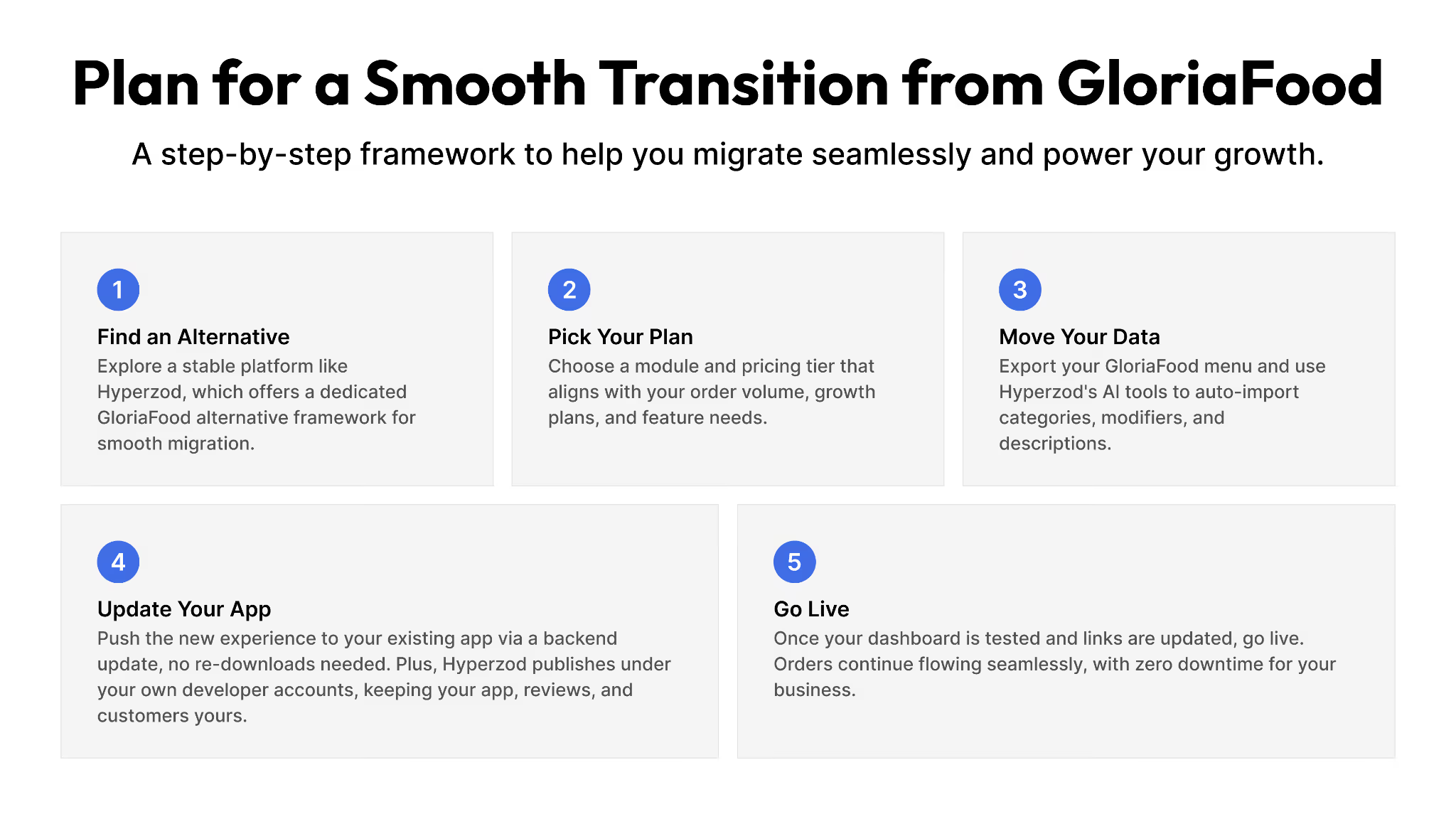
Your 5-Step Plan For A Smooth Transition From GloriaFood
Moving your entire digital storefront might feel overwhelming, but you can streamline the process by following these five essential steps to get your restaurant back on track.
- Visit an Alternative Platform
Start by exploring a stable, long-term solution. Many restaurant owners are heading to Hyperzod because it offers a specialized GloriaFood alternative framework designed specifically for this migration.
- Choose an App Module and A Plan That Fits Your Need
Every restaurant is different. Whether you are a single location or a growing chain, you ought to pick an app module and a pricing tier that aligns with your order volume and feature requirements (like branded apps, etc).
- Export or Transfer Data from GloriaFood to Hyperzod
Now this is an important step, and it is recommended that restaurants must export their menu data from GloriaFood and use Hyperzod’s AI-assisted tools to import their categories, modifiers, and descriptions automatically.
- Push the Updates on Your Existing App
You don’t want to lose your current app users. By updating the backend, you can push the new ordering experience directly to your existing app, to make sure there is a seamless transition for your loyal customers without forcing them to download something new. One thing worth knowing is that Hyperzod publishes apps under the client's own Apple and Google developer account. This simply means your app listing, your reviews, and your customer base belong to you and not to the platform. If you ever switch again, you keep everything.
- Go Live
Once your links are updated and your new dashboard is tested, flip the switch. Your new ordering system will now handle the traffic that used to go to GloriaFood, keeping your revenue flowing without interruption.
Choosing the Right Replacement: What to Actually Evaluate
This is not a feature comparison chart. Instead, it is a buying framework for restaurant owners who are making this decision once and want to get it right.
The pricing question
GloriaFood had a genuinely free pickup tier, which is rare. That era is over, for GloriaFood and really for the industry. What you are looking at now is a flat monthly fee, sometimes combined with a small per-order fee. Compare this to the 15–30% commission that aggregators like DoorDash or Uber Eats take on every order, and direct ordering still wins by a wide margin. Check out hyperzod.com/pricing to see what a transparent, monthly subscription model actually looks like.
The stability question
The reason you are being forced to move right now is that a corporate acquisition killed the platform you built your ordering on. Before committing to a replacement, ask whether it's independently owned, bootstrapped, or VC-backed. A platform that's been operating profitably for over a decade on its own is a different kind of bet than one that's burning investor money and will eventually need to monetize aggressively or get acquired.
The ownership question
Does your ordering link belong to you or to the platform? Does your app listing live under your developer account or theirs? Does your customer data come with you if you switch? Ask these questions explicitly. The answer tells you a lot about how a platform thinks about the relationship.
Why Hyperzod Is Where Most GloriaFood Users Are Landing
By the time a restaurant owner has worked through the checklist above and thought seriously about the buying framework, Hyperzod tends to make sense on its own. But here's the short version:
Transparent pricing means your cost is clear and relatively predictable regardless of how many orders you do in a month. The AI menu import makes migration genuinely fast, especially for restaurants with complex modifier setups that would take days to rebuild manually. And over a decade of independent operation is a meaningful signal in an industry where platforms come and go.
The migration page at hyperzod.com/gloriafood-alternative walks through the full transition process and includes a free trial CTA so you can see exactly and experience what you are getting before committing.
Wrapping Up
If you want to see what your store looks like on Hyperzod before committing, start your trial for free.
The 2027 deadline sounds far away, but the best time to start this migration is before it feels urgent. Export your menu today. The rest follows from there.
You may also like.